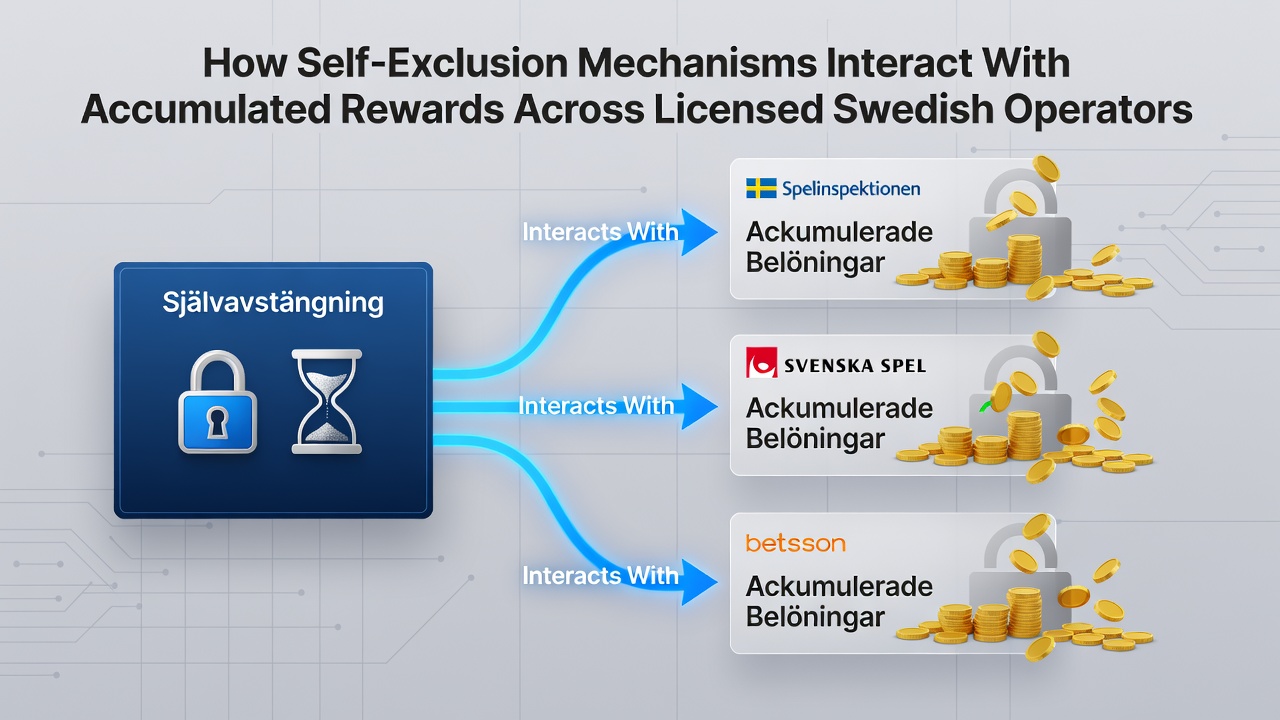
How Self-Exclusion Mechanisms Interact With Accumulated Rewards Across Licensed Swedish Operators
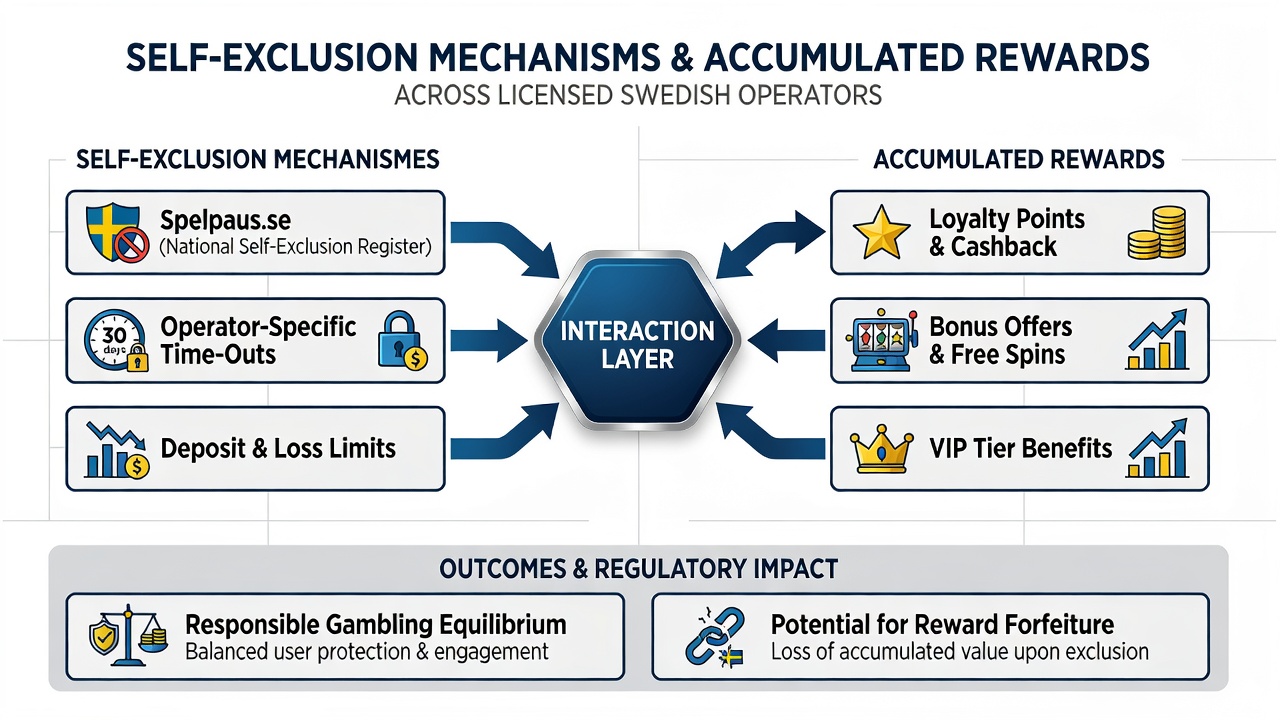
Self-exclusion through Spelpaus creates a nationwide block that licensed Swedish operators must enforce uniformly, and this system directly affects how accumulated rewards such as loyalty points, cashback balances, and pending bonuses are treated once an account enters exclusion status. Operators receive real-time notifications from the register, which triggers immediate suspension of all active promotions and freezes access to any earned rewards that have not yet been converted into withdrawable funds.
Core Mechanics of Spelpaus Integration
Every licensed operator connects its player database to Spelpaus through mandatory API protocols established by Spelinspektionen, so an exclusion request filed on one site automatically propagates across the entire regulated market. When this occurs, systems automatically archive pending reward balances rather than allowing immediate redemption, and the player receives a standardized notification outlining the status of each reward category. Data from Spelinspektionen shows that reward accounts tied to excluded profiles remain locked for the full duration of the exclusion period plus an additional cooling-off interval that operators apply before any reactivation review begins.
Reward Categories and Their Handling
Loyalty points accumulated through regular play enter a suspended state where no further earning or redemption is possible, whereas bonus funds that carry wagering requirements are typically voided if the requirements remain incomplete at the time of exclusion. Cashback offers linked to net losses follow similar rules, with operators required to settle only those calculations completed before the exclusion flag activates. Studies released by the Swedish gambling authority indicate that roughly 18 percent of excluded accounts in recent compliance audits held unredeemed reward balances exceeding 500 SEK at the moment of registration.
Operators must document each reward interaction in audit logs that regulators review quarterly, which creates a traceable record showing exactly how balances were adjusted and why certain rewards survived while others did not. This documentation also covers multi-operator scenarios where a player holds active accounts with several licensed entities, because Spelpaus forces simultaneous treatment across all of them even when reward structures differ between platforms.
Cross-Operator Reward Synchronization
Because Spelpaus operates as a central registry, reward data does not transfer between operators during exclusion, yet each operator independently applies its own terms to the frozen balances. One platform might convert completed loyalty tiers into fixed vouchers that survive exclusion, while another simply deletes the same tier level upon receiving the exclusion notice. A report issued in August 2026 by a Nordic gambling research consortium highlighted that 62 percent of operators now use automated scripts to align their internal reward ledgers with Spelpaus updates within 15 minutes of notification, reducing manual errors that previously led to disputes over forfeited balances.
Players who later exit exclusion must re-register each reward program from scratch on every platform, since prior progress does not automatically resume. This reset applies even when the exclusion period ends early through formal revocation procedures, and operators are prohibited from restoring old reward histories without fresh verification steps that confirm the player has satisfied all responsible gambling checks.
Regulatory Oversight and Compliance Patterns
Spelinspektionen conducts targeted inspections that examine reward handling logs specifically for self-excluded accounts, and findings from these reviews feed into broader market reports that track how different license holders manage accumulated benefits. External audits commissioned by industry bodies have identified consistent patterns where operators with centralized reward engines experience fewer compliance issues than those relying on fragmented third-party systems. The Canadian Centre on Substance Use and Addiction published comparative findings that Swedish operators share with international counterparts, noting that centralized exclusion registers reduce reward-related disputes by an average of 41 percent compared with fragmented regional systems elsewhere.
Conclusion
Self-exclusion through Spelpaus intersects with accumulated rewards by freezing or voiding balances according to operator-specific rules that must still satisfy national licensing conditions, and this interaction produces uniform enforcement across all licensed Swedish platforms while allowing limited variation in how individual reward types are archived. Ongoing compliance monitoring continues to refine these processes, particularly as new reporting requirements take effect following the August 2026 data releases.